Redesigning a data-heavy campaign management platform
The aging population faces three interconnected challenges: cognitive decline that causes memory loss and disorientation, social isolation that affects emotional well-being, and caregiver burden that leaves families overwhelmed and under-supported. Existing tools often focused on reminders and monitoring but did little to provide consistent emotional support or meaningful human connection.
Core constraint: Users needed better organization, not less information. Any solution had to maintain full data density while dramatically improving navigability and workflow speed.
Key goals:
• Reinforce daily routines and time orientation
• Support medication and appointment adherence
• Encourage regular emotional check-ins
• Make family communication easier
• Notify caregivers when additional support may be needed
• Keep the interface simple and accessible for older adults
Research & Discovery
Designing for dementia patients meant designing for someone who might not remember using the product yesterday. So the approach centered on repetition without frustration, orientation without condescension, and escalation paths that respected dignity even in a crisis.
The research surfaced two audiences with opposing needs in the same product: seniors needed gentle, patient, low-cognitive-load interaction; caregivers needed enough visibility to feel confident without needing to check in constantly. Every feature had to serve both without either one feeling surveilled or ignored.
Designing Around Daily Life
The experience centered on a small set of recurring activities rather than a complex dashboard.
Large text, familiar language, visual task cards, voice interaction, and gentle repetition made the system easier to understand and use.
Large text, familiar language, visual task cards, voice interaction, and gentle repetition made the system easier to understand and use.
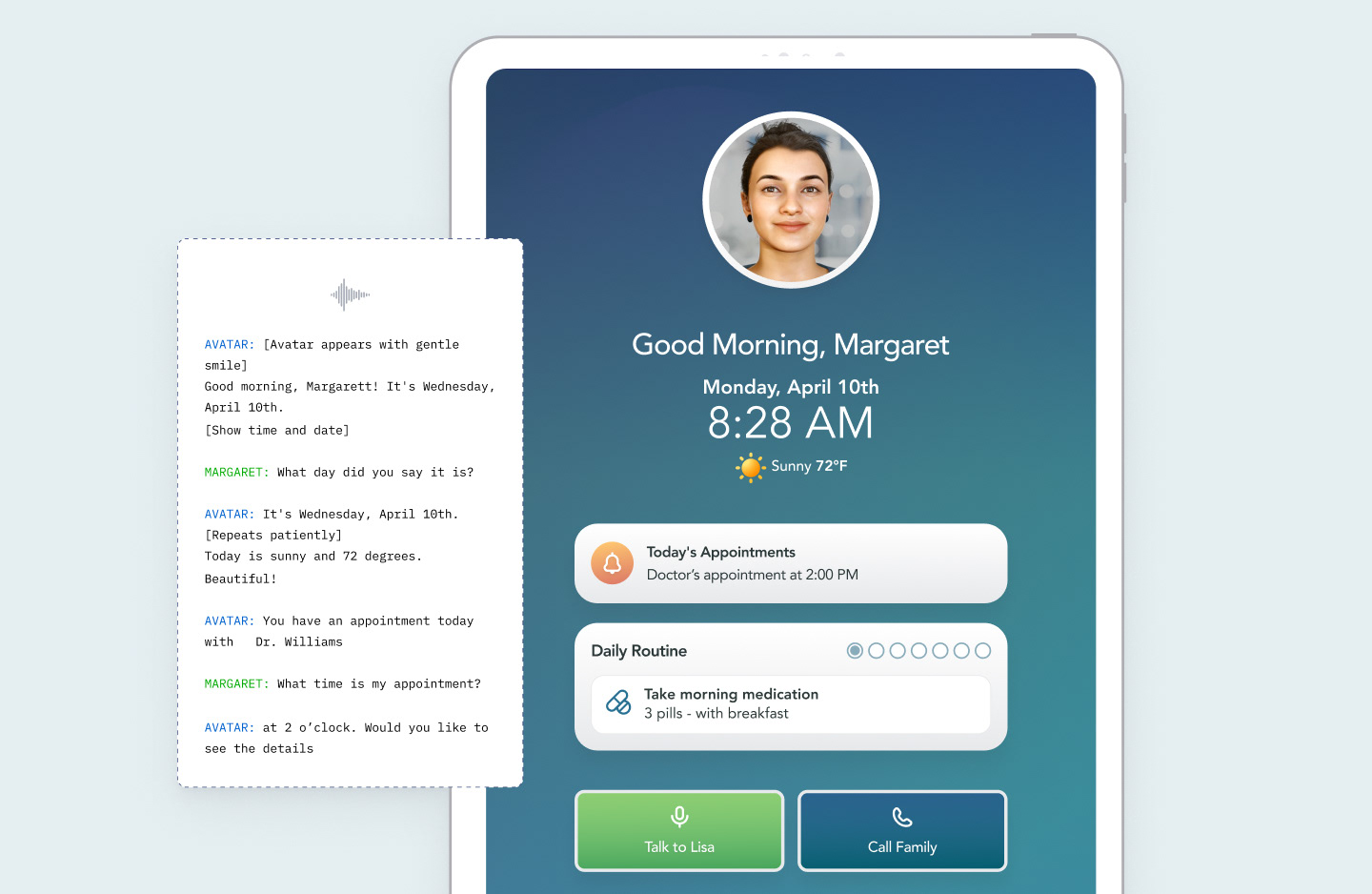
Time Anchor
Orientation through natural conversation - grounding seniors in time and context daily.
Key Elements:
• Personalized morning greeting with name, day, date, and time
• Today's appointments prominently featured
• Daily routine preview showing the first task
• Two-way conversational interface with avatar
• Progress dots showing routine completion status
• Personalized morning greeting with name, day, date, and time
• Today's appointments prominently featured
• Daily routine preview showing the first task
• Two-way conversational interface with avatar
• Progress dots showing routine completion status
Design Decisions:
• Morning Ritual: screen appears first thing to establish time orientation —
critical for dementia patients
• Conversational Memory Reinforcement: avatar repeats i
nformation on request
• Weather Context: supports clothing decisions and reality grounding
• Gentle Repetition: avatar repeats date/time when questioned
reinforcing memory without frustration
• Morning Ritual: screen appears first thing to establish time orientation —
critical for dementia patients
• Conversational Memory Reinforcement: avatar repeats i
nformation on request
• Weather Context: supports clothing decisions and reality grounding
• Gentle Repetition: avatar repeats date/time when questioned
reinforcing memory without frustration
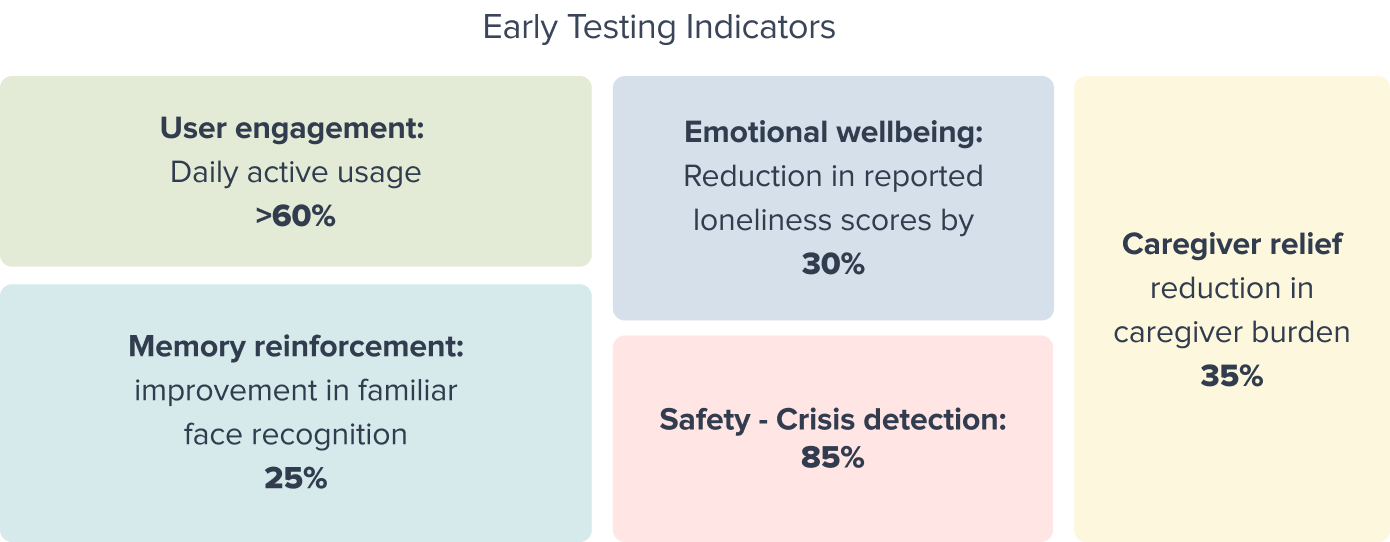
Early testing suggested a reduction in confusion around day/date and fewer missed appointments.
Routine Coach
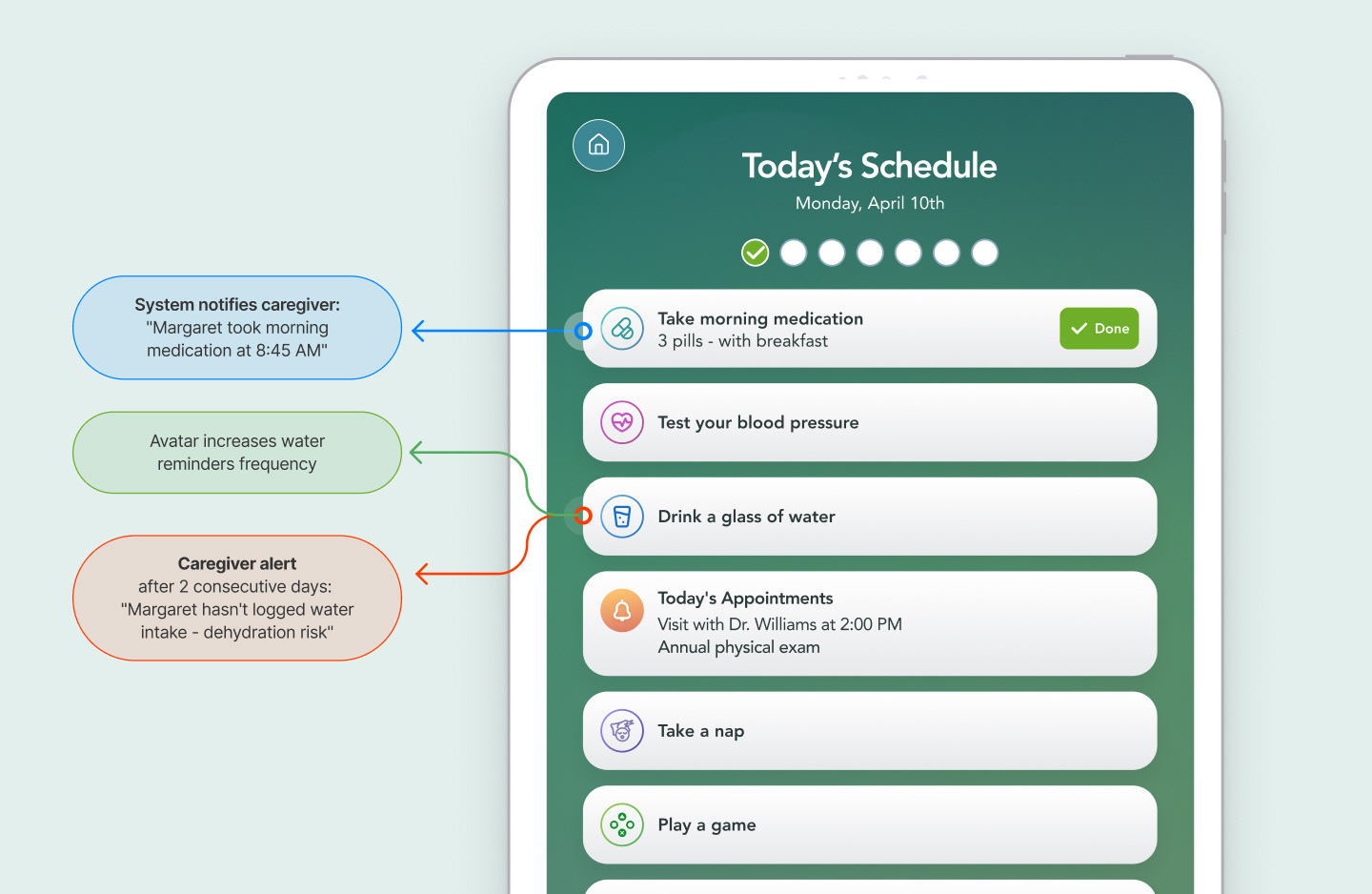
Balancing structure with flexibility — gentle persistence without nagging.
Key Elements:
• Maximum 6 tasks per day, capped based on usability testing
• Each task card shows title, icon, a photo of the actual item,
and completion status
• Visual progress indicator (e.g., 2 of 5 completed)
• Celebration animation on task completion
• Avatar reminder appears as a gentle prompt, not a notification
• Maximum 6 tasks per day, capped based on usability testing
• Each task card shows title, icon, a photo of the actual item,
and completion status
• Visual progress indicator (e.g., 2 of 5 completed)
• Celebration animation on task completion
• Avatar reminder appears as a gentle prompt, not a notification
Design Decisions:
• Visual icons improved task recognition in testing
• Occasional appointments included alongside daily tasks
• Progress Without Pressure: progress bar signals accomplishment
without inducing anxiety
• Gentle Reminders: avatar reminds but doesn't nag — validated with
caregivers as "gentle persistence"
• Visual icons improved task recognition in testing
• Occasional appointments included alongside daily tasks
• Progress Without Pressure: progress bar signals accomplishment
without inducing anxiety
• Gentle Reminders: avatar reminds but doesn't nag — validated with
caregivers as "gentle persistence"
Early testing suggested improved medication adherence and fewer caregiver-flagged hydration concerns.
Mood Mirror
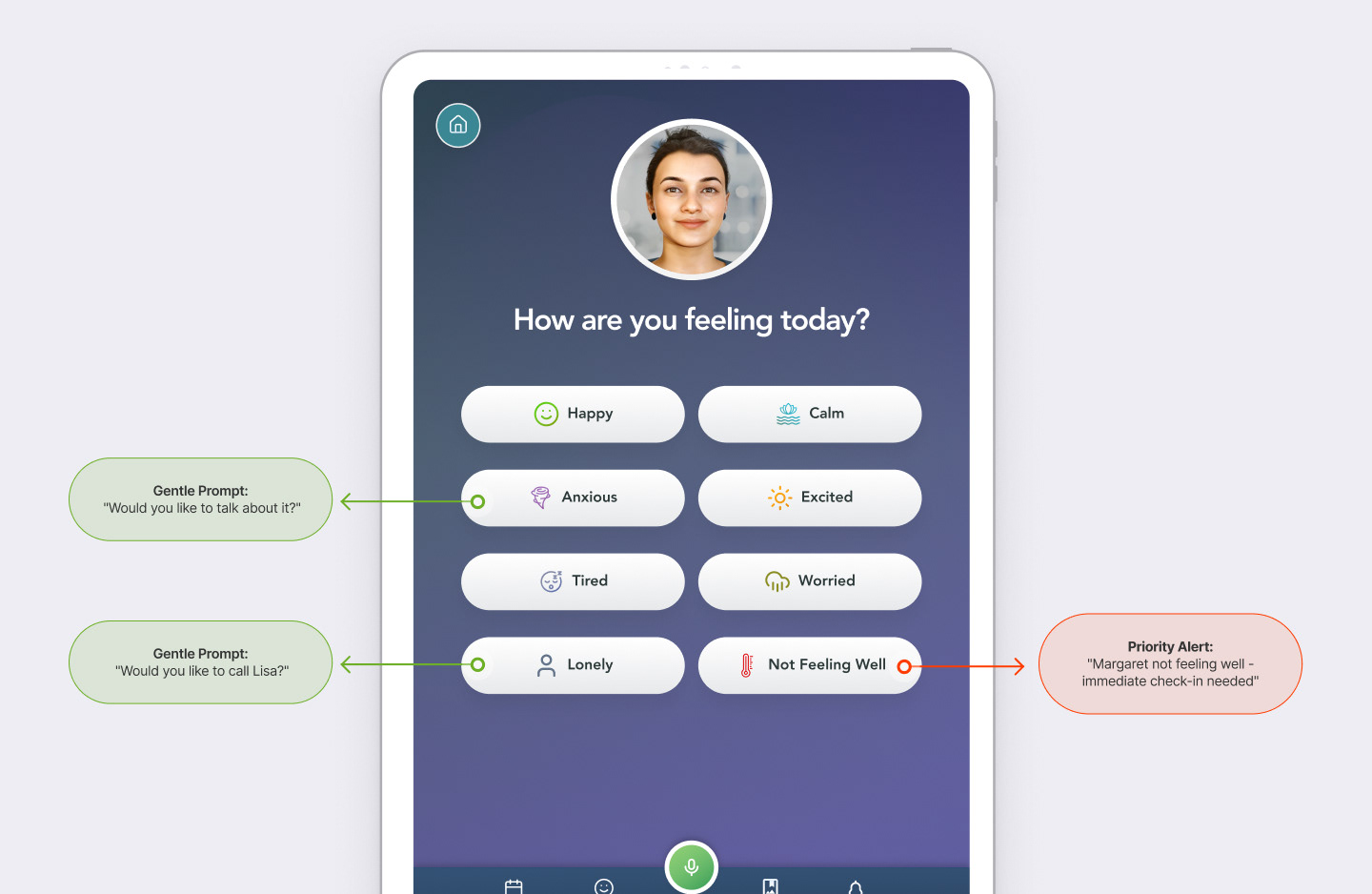
Emotional check-in system with intelligent caregiver alerts and crisis detection.
Key Elements:
• Daily emotional self-assessment
• Mood history tracked for pattern recognition
• Context-aware response triggers based on selection
• Daily emotional self-assessment
• Mood history tracked for pattern recognition
• Context-aware response triggers based on selection
Design Decisions:
• Daily Prompt: avatar gently asks "How are you feeling today?"
• Mood-Based Notifications: caregiver receives context-specific alerts
• "Lonely" → Family Connection: automatically suggests calling a
family member
• "Worried/Anxious" → Support Options: offers Talk to Lisa or
breathing exercises
• "Not Feeling Well" → Priority Alert: immediate caregiver notification
for health concerns
• Daily Prompt: avatar gently asks "How are you feeling today?"
• Mood-Based Notifications: caregiver receives context-specific alerts
• "Lonely" → Family Connection: automatically suggests calling a
family member
• "Worried/Anxious" → Support Options: offers Talk to Lisa or
breathing exercises
• "Not Feeling Well" → Priority Alert: immediate caregiver notification
for health concerns
Early testing showed strong crisis-detection accuracy and a reduction in reported loneliness among participants.
Virtual Relative
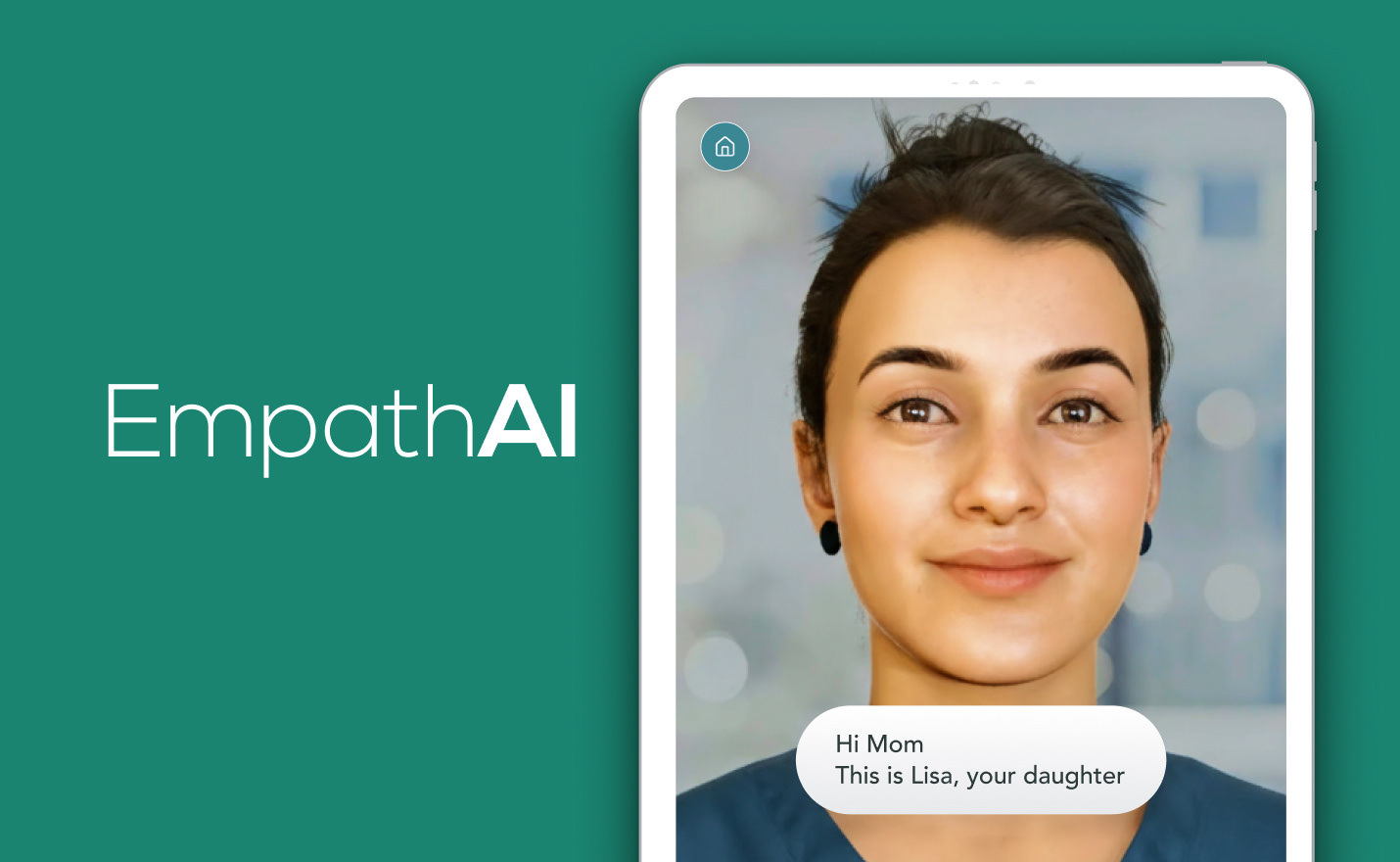
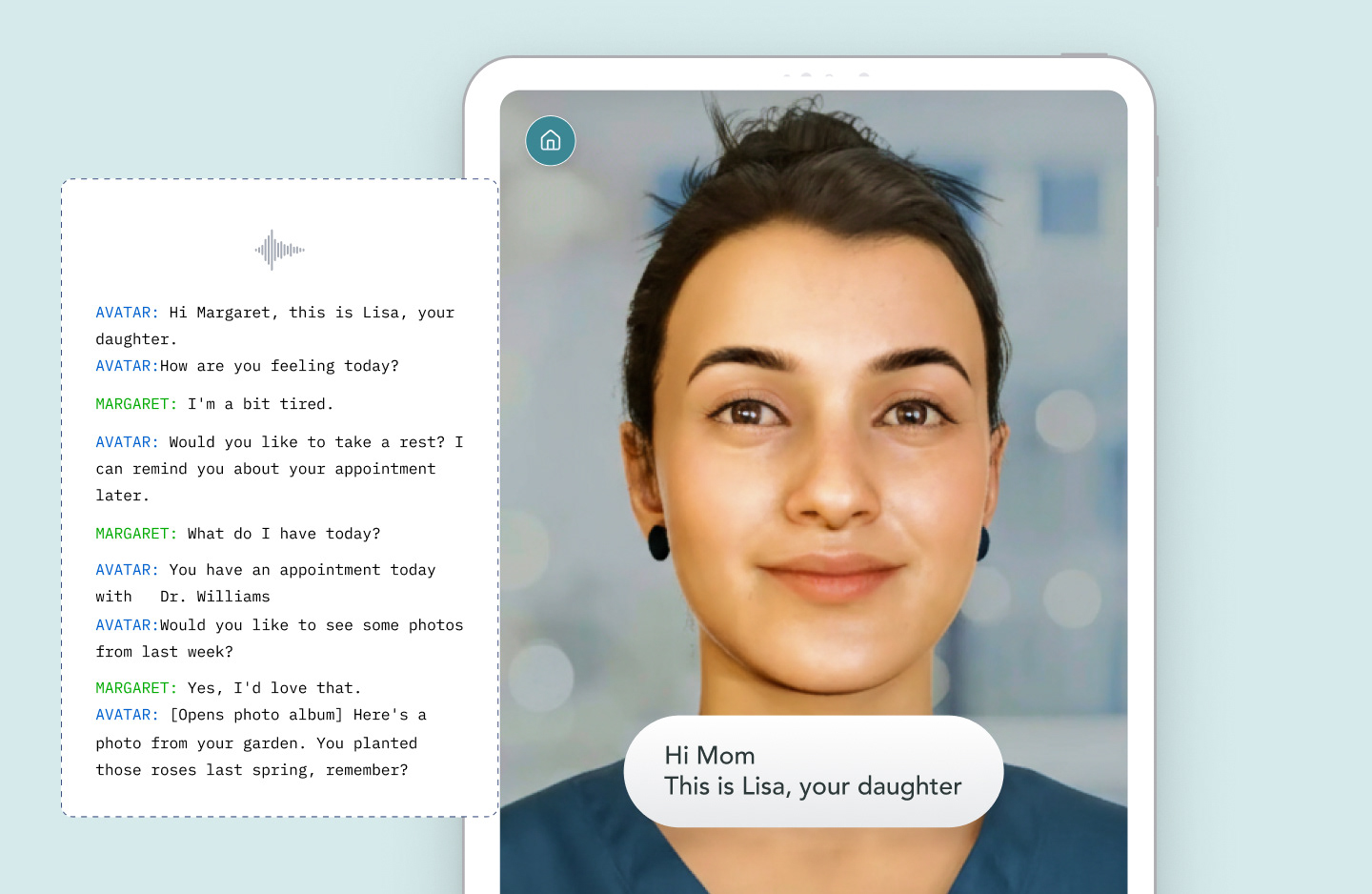
Virtual Relative creates a more personal conversational experience using the voice and identity of a familiar family member.
Key Elements:
• Full-screen avatar with realistic facial expressions and lip sync
• Speech-to-text for voice input
• Natural back-and-forth dialogue with patient repetition when needed
• Avatar can tell stories, share memories, and provide emotional support
• Full-screen avatar with realistic facial expressions and lip sync
• Speech-to-text for voice input
• Natural back-and-forth dialogue with patient repetition when needed
• Avatar can tell stories, share memories, and provide emotional support
Design Decisions:
• Full-screen avatar with realistic facial expressions and lip sync
• Speech-to-text for voice input
• Natural back-and-forth dialogue with patient repetition when needed
• Avatar can tell stories, share memories, and provide emotional support
• Full-screen avatar with realistic facial expressions and lip sync
• Speech-to-text for voice input
• Natural back-and-forth dialogue with patient repetition when needed
• Avatar can tell stories, share memories, and provide emotional support
Early testing indicated improved social interaction and memory
recall among participants.
recall among participants.
Success Measures and
Key Takeaway
Key Takeaway
The project reached the concept and early prototype-testing stage rather than full production. Testing with a small group explored the following measures, which provide a framework for future validation
• Daily engagement and routine completion
• Medication and appointment adherence
• Recognition of familiar people and information
• Reduction in reported loneliness
• Caregiver confidence and reduced burden
• Accuracy of health and safety escalation
Designing AI for older adults requires more than simplifying an interface. The experience must feel patient, familiar, and emotionally safe while maintaining clear boundaries between companionship, daily assistance, and caregiver intervention.